
 RUS
RUS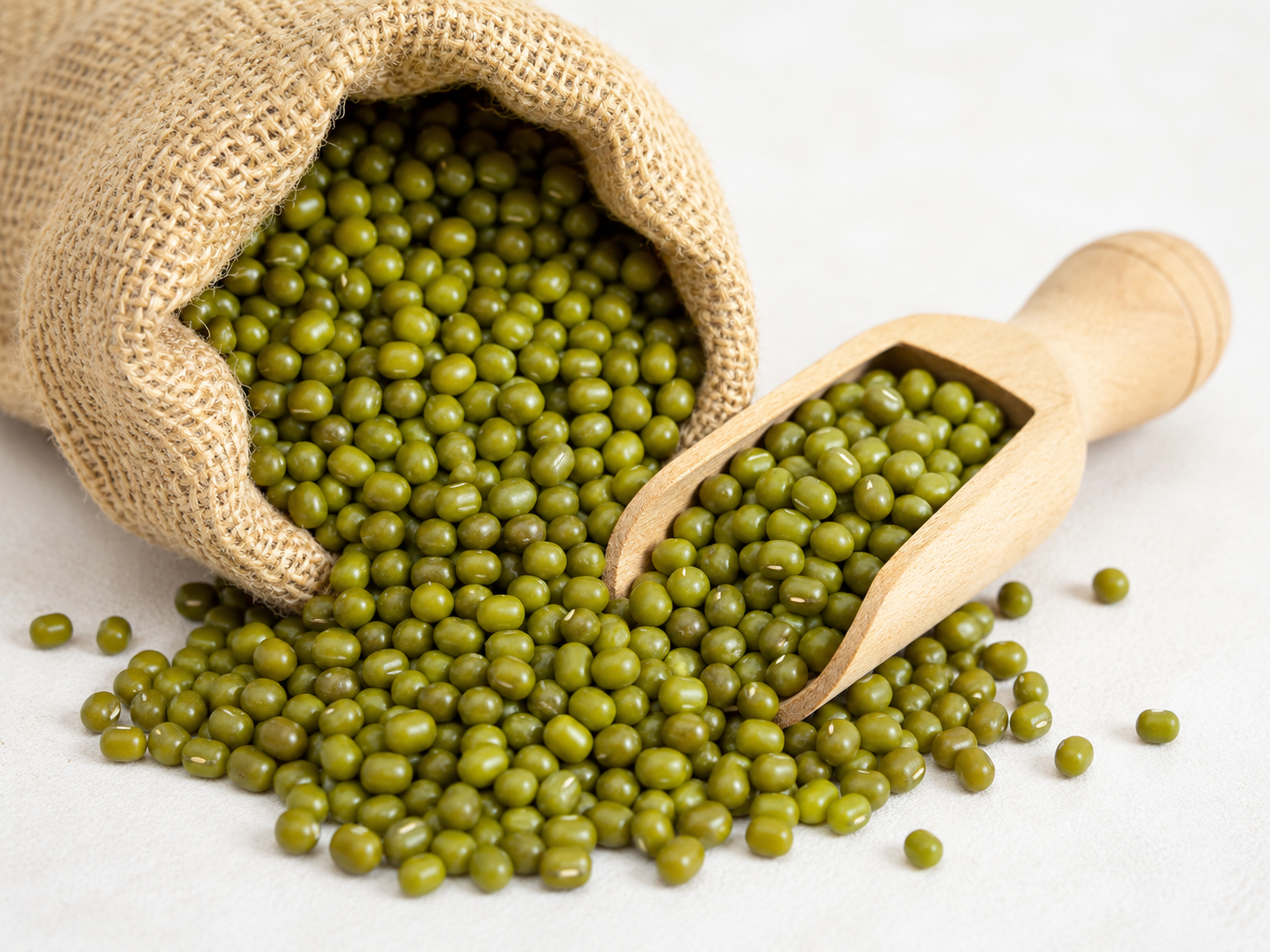
A small bean —
great benefits
India is considered the homeland of mung beans. From there, this legume crop spread widely across Asia — to China, Pakistan, Thailand, Vietnam, Korea, and other countries.
In Ancient China, mung beans were valued for their lightness, nutritional properties, and versatility. Today, they are used in cooking, medicine, and cosmetology, remaining one of the most popular plant-based products.
A source of strength
and longevity
The outstanding scholar of the Ancient East, Avicenna, noted the beneficial properties of mung beans and considered them a product that supports health and vital energy.
Mung beans are rich in plant-based protein, fiber, B vitamins, iron, magnesium, and potassium. They help support heart function, the nervous system, and digestion.
Thanks to their mild taste and easy digestibility, mung beans are suitable for everyday nutrition and pair well with vegetables, grains, and spices.


Simple, tasty,
versatile
Mung beans are easy to cook, soften well, and retain a pleasant taste. They are used in soups, porridges, side dishes, salads, sauces, and Eastern dishes.
Unlike many other legumes, mung beans are low in fat while remaining a nutritious and satisfying product.
They are not only a healthy ingredient but also a base for simple dishes that fit easily into a modern healthy diet.
Plant-based
protein
Easy
digestion
Rich in
minerals
Suitable for
healthy nutrition